

DANISHES
INGREDIENTS
385g All Purpose Flour
140g Milk, warm
1 tsp Osmotolerant Yeast
50g White Sugar
100g Eggs, cold
56g Butter, soft
½ tsp Salt
227g Butter, cold (beurrage)
1 Egg (egg wash)
+ Filling of choice
METHOD
DAY ONE
In a small bowl, add the sugar, milk, eggs and yeast and mix together.
In a separate bowl, add the flour, salt and soft butter. Using your hands, mix the ingredients together to form a sticky dough.
Transfer the dough to a clean work surface and knead the dough until smooth. Do not add any additional flour as the stickiness will transform into a soft dough with kneading.
Roll the dough to 20 x 32cm, wrap tightly in plastic wrap and place in the refrigerator for 30 minutes to chill.
Place the cold butter for laminating between two sheets of parchment paper and form a rectangle 16 x 20cm. Use a rolling pin to press heavily on the butter to manipulate it into shape.
Fold the parchment paper around the butter and place back into the refrigerator to firm up. The butter needs to be firm but pliable.
When the butter is firm, remove the butter and dough from the refrigerator. The dough is ready for lamination.
Remove the butter block from the parchment and place on the right side of the dough.
Fold the left side over the right side so the edges meet. Pinch the seam of the dough over the butter to encase it and press down gently on the join with a rolling pin to seal it.
Extend the length of the dough from 16cm to 32cm. Do not extend the width, only the length.
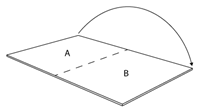
Perform the first single fold.
Imaging the dough in halves, fold A in the right direction to end on top of B.
Wrap the dough tightly in plastic wrap and place in the refrigerator for 45minutes.
After the chilling time, extend the length of the dough from 16cm to32cm. Do not extend the width, only the length.
Perform the second single fold. Imaging the dough in halves, fold A in the right direction to end on top of B.
Wrap the dough tightly in plastic wrap and place in the refrigerator for 45 minutes.
Remove the dough from the refrigerator after 45 minutes and let sit at room temperature for 10 minutes.
Extend the length of dough from 16cm to 48cm. Do not extend the width, only the length. Perform a double fold.
Imaging the dough in thirds, fold A in the right direction to end on top of B. Then fold C in the left direction to end on top of A.

Wrap the dough tightly in plastic wrap and refrigerate overnight.
DAY TWO
Roll the dough to approximately 22cm x 62cm. Wrap the dough tightly in plastic wrap and refrigerate for 1 hour.
Remove the dough and trim the sides evenly to be exactly 20cm x 60cm.Roll the dough if it has shrunk while chilling.
For square danishes, mark 10cm increments along the width and length of the dough. Use a ruler to accurately connect the marks to give 12 equal 10 x 10 cm squares. Cut out the 12 squares of pastry.
Alternatively, cut the dough to your preferred Danish shape and size.
Place the dough on a baking tray lined with parchment paper and cover loosely with plastic wrap. Proof until doubled – about 1-2 hours at room temperature.
Near the end of proofing, preheat the oven to 400F (204C).
Egg wash the top edges of the Danishes an dock the centres with a fork.
Bake until golden brown, about 15-20 minutes.
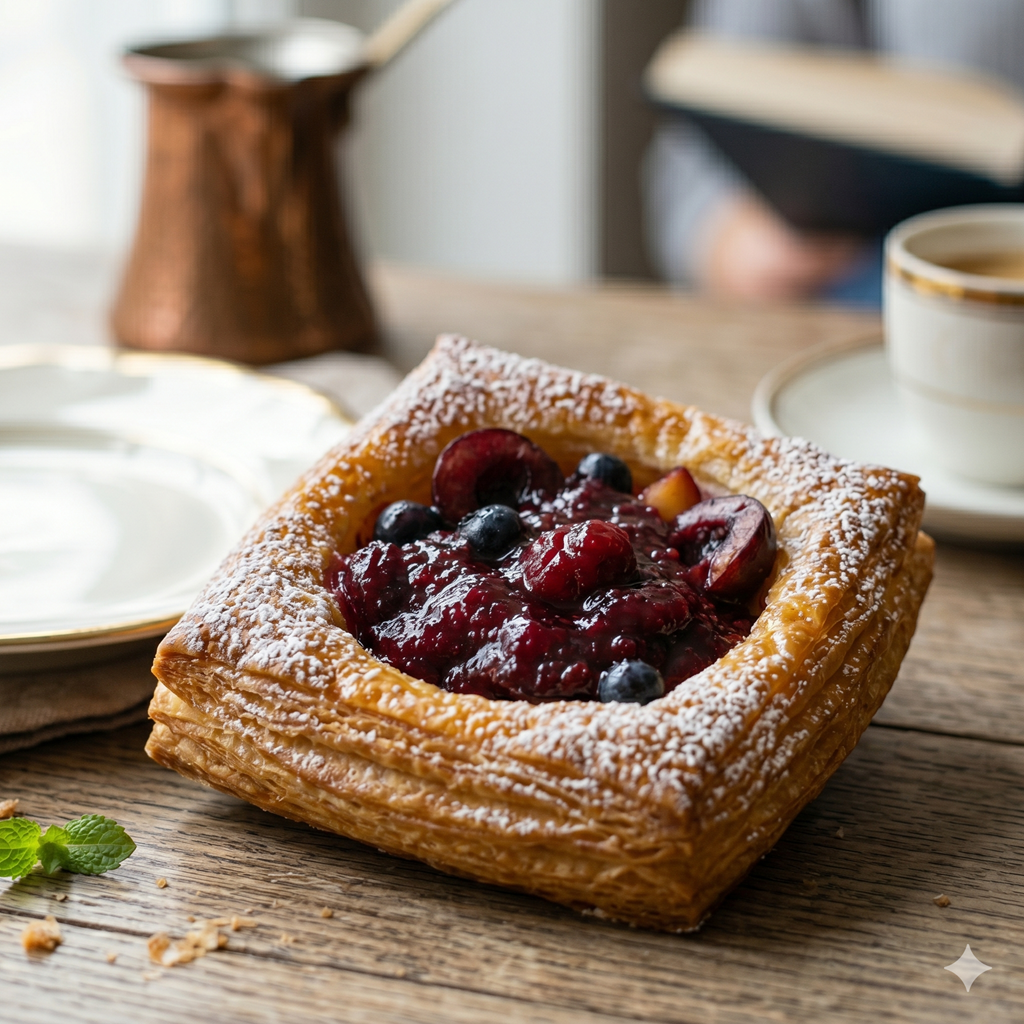
Cool completely before filling with your filling of choice.
Filling suggestions:
· Plum, Cardamom and Goats Cheese Danish
· Strawberry and Cream Cheese
· Crème Patisserie
· Jams or preserves
· Fresh blackberries, apricots or apple compote


